
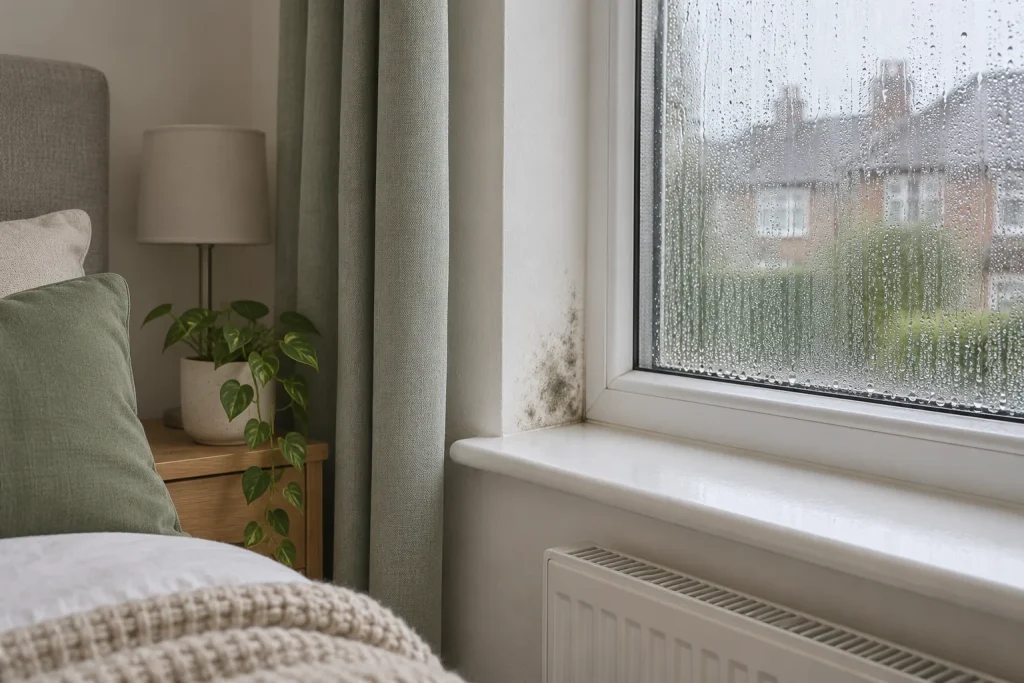
Finding dark marks on a wall or water on a window can make the cause seem obvious. Yet condensation, mould and damp describe different things. Condensation is liquid water that forms when humid air meets a cooler surface. Mould is growth that can develop where a material remains damp. A leak or rainwater entering the building may leave similar looking marks and may also create the conditions for mould. Reading the pattern helps you decide what to investigate, but appearance alone cannot provide a reliable diagnosis.
Start with the water, not the colour
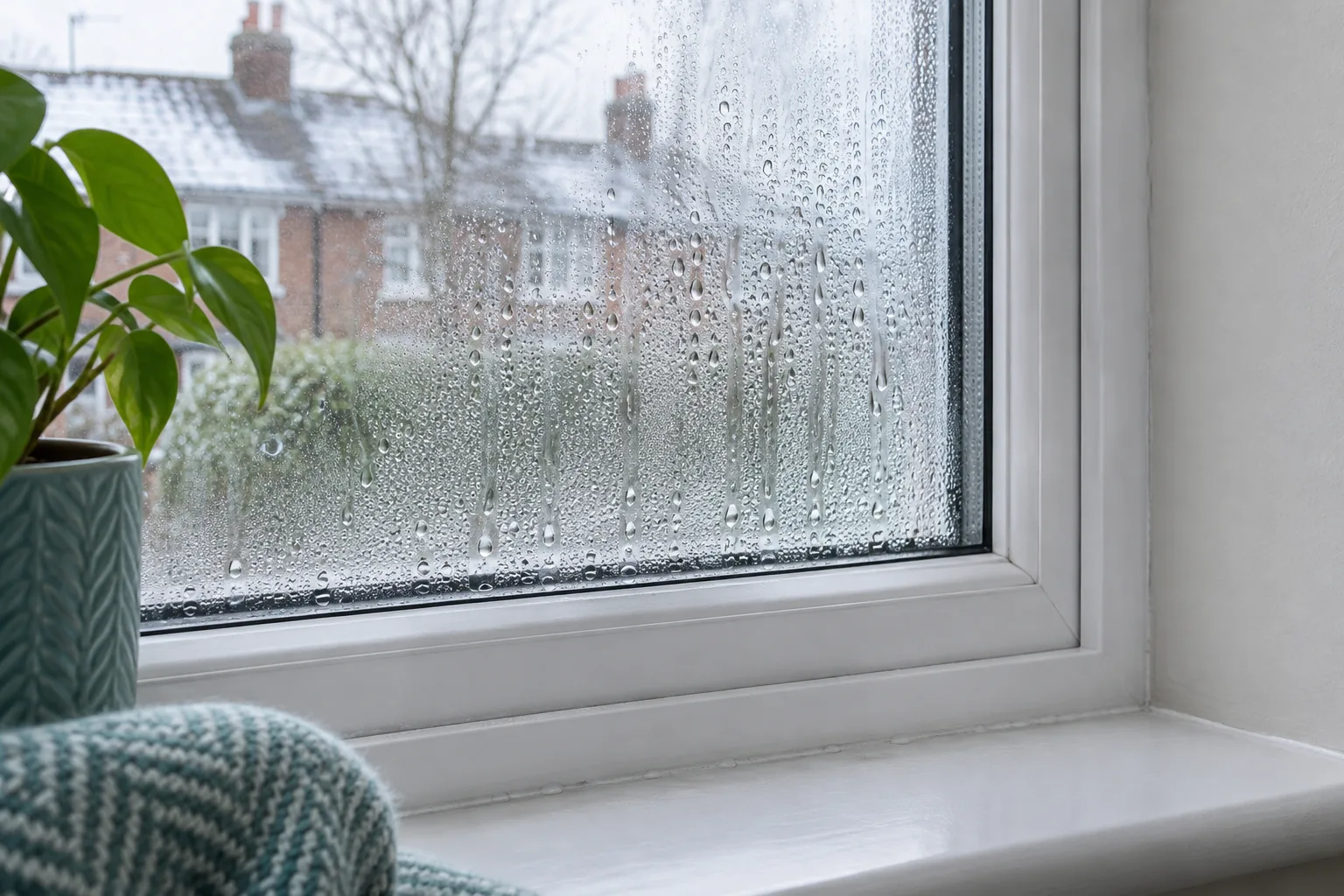
Droplets on glazing after a cold night are a familiar sign of condensation. Moisture may also collect on a window reveal, tile or cold external wall. It can be less visible on painted plaster, where repeated wetting may eventually produce staining or growth. A dry looking surface at midday might have been wet for several hours overnight. Note when moisture appears, how long it lasts and whether it changes after cooking, bathing or drying laundry.
Mould usually looks like a patch or cluster of spots rather than clear droplets. Its colour does not establish the species or the moisture source. Dark growth beside a window may coincide with condensation, while growth beneath a plumbing leak has a different cause. Do not decide that a wall is sound merely because a patch is small. The affected material and what lies behind it matter too.
What the location can tell you
Repeated marks in corners, around window reveals or behind furniture on an outside wall can point towards cool surfaces and limited air movement. These are clues, not proof. A patch confined to one section of wall, especially if it changes after rain, raises a different question: could water be entering through an external defect? A stain near pipework or below a bathroom may suggest a plumbing source. Where the pattern is unclear, a damp inspection can bring the location, history and moisture evidence together.
Look at both sides of the affected area where it is safe and practical. Outside, a blocked gutter, faulty downpipe or damaged finish may direct rainwater towards a wall. Inside, check whether the patch sits near a window, radiator pipe or room with frequent moisture. Avoid removing finishes just to follow a guess; disturbing damaged material may complicate assessment and expose hidden growth.
Keep a short record
A few dated photographs are more useful than one close-up with no context. Include a wider view showing the room and nearby features. Note whether the surface feels wet, whether droplets appear at particular times and whether the mark changes after rainfall. Record when it was first noticed and any previous cleaning, decorating or repairs. If there is a musty smell, note when it is strongest. This information helps someone assessing the property understand a changing problem rather than relying on a single visit.
Try to compare like with like. A photograph taken every few days from the same position shows whether the boundary is moving. You can also mark the edge of a stain on a photograph rather than drawing on a finished wall. A record cannot replace an inspection, but it can reveal a relationship with weather or room use that would otherwise be missed.
How condensation develops
Everyday activities release moisture into indoor air. When that air reaches a sufficiently cool surface, some of its water vapour can turn into liquid. The result may be easy to see on glass and harder to notice on a wall. Ventilation, heating, insulation and surface temperature all influence what happens. A home may have more than one contributing factor; simply telling occupants to open a window can overlook a defective fan or a cold part of the building.
If windows regularly collect water, see whether available extractors work during cooking and bathing and whether trickle vents are open where fitted and appropriate. Wipe away pooled water so it does not sit on frames or sills. These observations and modest steps can reduce moisture on surfaces, but they do not identify every cause. Where the same area repeatedly becomes wet, a condensation and ventilation assessment may help distinguish room conditions from another source.

Signs that need another explanation
Condensation does not explain every damp patch. Water entering through a roof, wall or window can show up after rain, sometimes some distance from the opening. A hidden leak may create a persistent localised patch even when the room is well ventilated. Water can travel along materials before it becomes visible, so the first stain is not necessarily directly below the fault. A hidden leak investigation is relevant when the position, timing or nearby pipework suggests a concealed source.
Brown staining, peeling finishes or soft plaster deserve attention, but none identifies a cause on its own. Old marks may remain after a problem has been fixed. Conversely, a freshly painted surface can hide ongoing moisture for a time. Ask what has changed: weather, plumbing work, a new window, a failed extractor or a room layout that restricts airflow.
What not to infer from one observation
One humidity reading, a photograph or the colour of a patch cannot settle the question. Moisture meters can add useful evidence when used in context, but their readings depend on the material and method. A room can also have condensation and an external leak at the same time. An assessment should consider the history, visible condition and possible moisture routes together, and explain what remains uncertain.
Treat visible mould as a reason to address both the growth and the damp conditions that allowed it. Covering it with paint or repeatedly cleaning the same spot will not resolve an active leak or persistent condensation. Government guidance for England stresses identifying and addressing all sources of water damage and condensation, rather than dealing with the surface alone.
Where several clues conflict, resist choosing a remedy by elimination. A wet window does not rule out a leaking wall, and a damaged gutter does not explain every mark indoors. Ask which observation would change your view. A photograph after rain, an extractor check or comparison with surfaces may narrow the possibilities without pretending to provide certainty.
Choose the next step from the pattern
If moisture appears mainly on cold mornings and clears as the room warms, start by documenting the pattern and checking how ventilation works. If a patch grows after rain, investigate the outside of the building. If it stays wet near plumbing, consider a leak. If mould returns despite cleaning, ask what is keeping the material damp. The correct response depends on the source, the extent of growth and the condition of the affected material.
For a persistent or uncertain problem in Harrow, describe what you have seen, when it changes and any steps already tried. A mould inspection can assess visible growth alongside the moisture evidence and help identify a sensible next step for the property.