
Mould Inspection in Harrow
An inspection looks at where mould is growing and the conditions around it. The pattern can help decide which moisture source needs further attention, but it is not a diagnosis by itself.
- Review visible growth and surroundings
- Consider moisture and room conditions
- Understand the next investigation
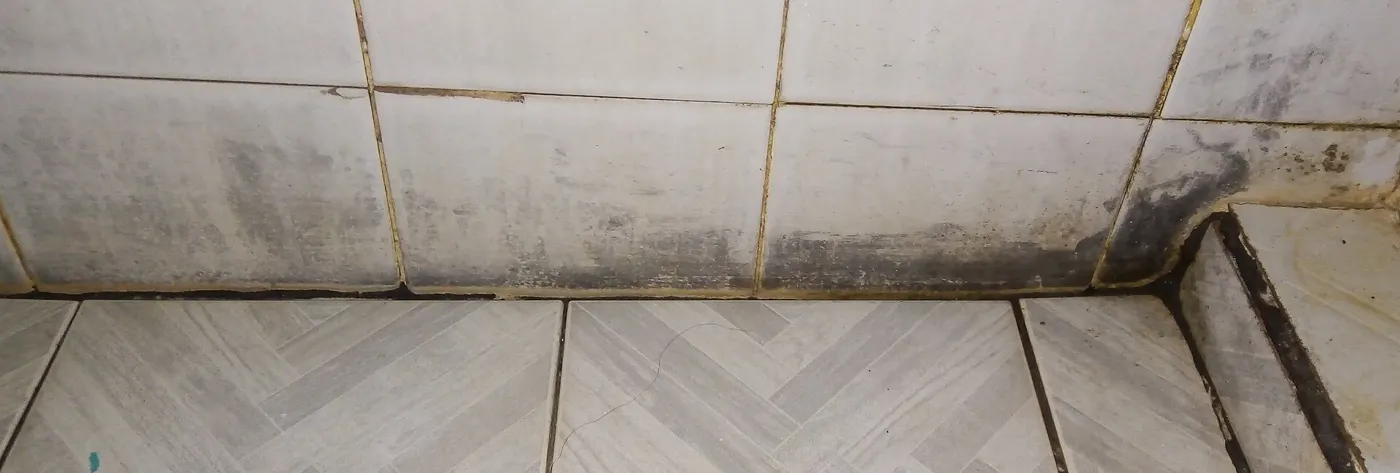
What does a mould inspection examine?
We consider visible growth, affected material and surrounding conditions in a Harrow property.
Can an inspection identify the source immediately?
The visible pattern gives clues, but concealed areas and incomplete evidence may require further investigation.
The pattern is part of the evidence
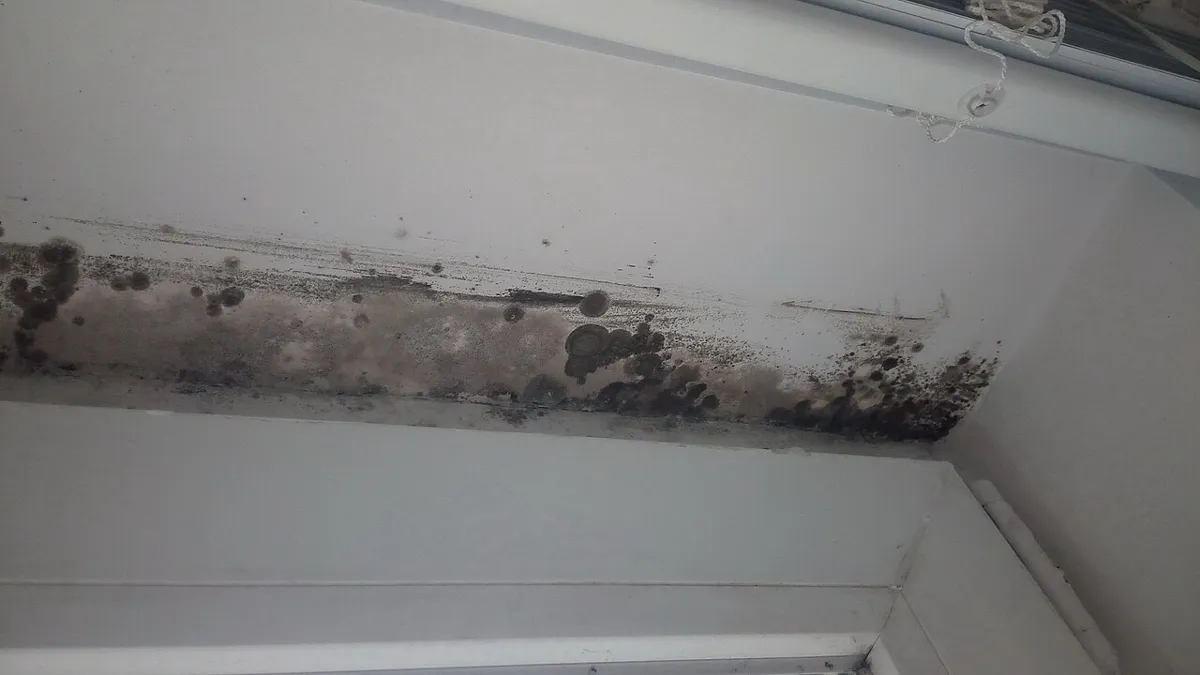
Marks along a window reveal may be associated with a cold surface, but water around the frame can have another origin. Growth behind a wardrobe may indicate a persistently cool area with restricted air movement. Neither location proves the cause on its own.
Note whether the marks are new, seasonal or returning. Photographs taken over time and details of any recent leak or building work can help establish a useful history.
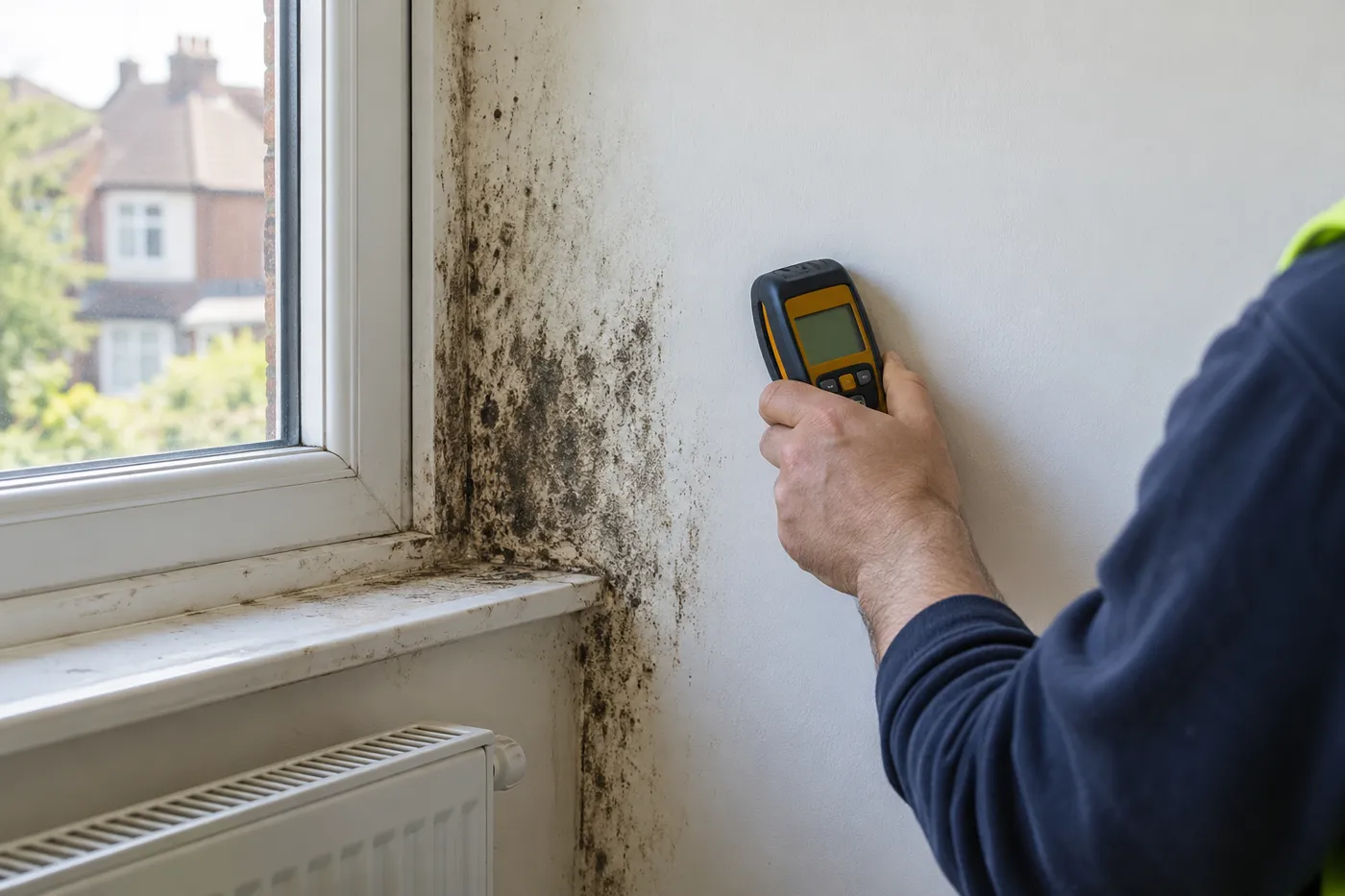
What an inspection can consider
The affected material, adjoining rooms and external position all matter. Moisture readings, where appropriate, are interpreted in the context of the material and the location; a reading alone cannot identify a leak or establish the type of mould.
Access also defines the inspection. A surface hidden behind fixed furniture or inside a wall may not be visible without further work. Ask what can be inspected and whether any proposed additional investigation needs separate agreement.
Making sense of the findings
An assessment may suggest indoor condensation, water entry, a leak or more than one contributing factor. If the evidence is inconclusive, the next step may be to observe the area, seek further investigation or consult an appropriate trade.
Discuss the extent of visible growth and the proposed scope before arranging removal. If a moisture source remains active, cleaning may not provide a lasting outcome.
| Observation | What we consider | Possible next step |
|---|---|---|
| Growth near a window | Look at the reveal and surrounding material. | Consider condensation and other moisture routes. |
| Growth behind furniture | Check accessible wall surfaces and room conditions. | Discuss access and possible cold surfaces. |
| Concealed area | The surface may not be visible during the visit. | Explain the limitation and agree any further investigation. |
Related ways to investigate
Questions before you arrange a visit
Can you identify the cause just by looking?
The visible pattern provides clues, but the history, surrounding surfaces and other evidence need to be considered together.
Does an inspection always include sampling?
Sampling is not assumed. Ask what the proposed inspection includes and whether any additional test is appropriate.
Should furniture be moved?
Clear safe access where practical, but do not disturb large areas of growth. Discuss heavy or fixed furniture before the visit.
How we inspect visible mould
We start with your description of the property and the affected areas. A photograph showing the whole wall can be more useful than a close-up alone because it shows the position of the mark relative to windows, corners and adjoining rooms. Tell us whether the growth has returned after an earlier clean.
We look at accessible growth and the material around it, noting the pattern and the places where moisture may collect. A patch near a cold window and one below a bathroom may have different explanations. We consider the history with what is visible rather than naming a cause on colour alone.
Where measurements are appropriate, we interpret them in relation to the material, surface finish and location. A meter can provide an indication to investigate, but it does not identify a particular organism or independently prove a leak. Areas behind fixed finishes may remain outside the visible inspection.
We explain the observations, the limitations and the possible next step. That may be removal, closer investigation of damp or a separate assessment of a suspected source. The work proposed after the visit should be agreed with you before it proceeds.
Preparing useful information for the inspection
Show us where growth is visible and tell us whether other rooms have been affected. If the pattern has changed, photographs with approximate dates can help explain the sequence. Tell us about previous cleaning, redecoration, leaks or building alterations, and point out any areas you cannot safely access.
A useful history does not require you to diagnose the cause. It is enough to say what you observed: for example, that the window is wet in the morning or that a stain gets darker after prolonged rain. Those details help us decide which observations are relevant and what questions remain open.
Understanding what an inspection can establish
We can consider accessible surfaces, surrounding conditions and the information available during the visit. A visible inspection cannot reveal every concealed cavity or establish the condition behind a fixed unit. The proposed scope should identify any such limits so that an absence of visible evidence is not mistaken for proof that no problem exists.
Instrument readings, if appropriate, are interpreted with the material and the location. They may help compare areas or indicate where to look more closely. They should not be presented as a stand-alone identification of mould species, a guarantee of the moisture source or a substitute for examining the wider pattern.
Using the findings
After the visit, ask which areas were checked, which were inaccessible and why a particular next step has been suggested. The result might point towards condensation, external water, a possible leak or a combination. If the available evidence is inconclusive, further investigation may be more appropriate than an immediate assumption.
If removal is proposed, agree the treatment area and any exclusions separately. If a different trade needs to address the suspected source, clarify who will arrange that work. The inspection should help you make that decision without implying that unrelated repairs are included.
What happens before a mould inspection
We start by asking where the growth is visible, when it was first noticed and whether it has appeared before. Photographs taken over time can show whether a patch is spreading or returning after cleaning. Tell us about earlier leaks, repairs, changes to the room or any connection with rainfall and window condensation. This history helps us plan what to look at; it does not establish a diagnosis without examining the property.
We also discuss access to the affected areas. Mould may be visible behind furniture, at a window reveal, on a ceiling or around a bathroom fitting. If a cupboard, large appliance or fixed finish limits access, tell us before the visit. We will explain which surfaces can be inspected as part of the agreed scope and which concealed areas would need a separate investigation.
Examining growth and the conditions around it
During the visit we look at the location and extent of visible growth, the affected material and nearby signs of moisture. A patch on a cold external corner may call for different questions from staining beneath a bathroom or a mark that changes after rain. We compare adjacent accessible surfaces and consider whether there is evidence of damaged finishes, persistent wetness or water running from another part of the building.
Where a suitable instrument can provide useful information, readings are considered alongside what we can see and the history of the room. Readings are affected by the material and finish; they cannot identify a moisture source or confirm the extent of concealed growth on their own. We do not assume that the colour of a patch establishes its cause or that every mark is mould. The limitations of a visual inspection will be explained.
Discussing findings and treatment
After examining the accessible areas, we distinguish observations from possible explanations that need further checking. If the pattern suggests a leak, rainwater ingress or recurring condensation, we can discuss which related investigation may help. More than one factor can be present. The inspection does not automatically include plumbing repairs, opening up walls, laboratory testing or redecoration; any extra work should be agreed separately.
Where removal is appropriate, the treatment plan should reflect the surface, extent of growth and whether the material is damaged or still wet. We discuss the proposed scope and access before work begins. Removing visible mould without dealing with its moisture source may allow it to return, so the next step may involve a repair or a closer look at room conditions.
After any treatment, keep a record if the same area becomes wet or marked again. Note whether it followed rain, water use or condensation, and keep photographs from a consistent viewpoint. These details help assess whether the original source has been resolved and whether another investigation is needed before the surface is redecorated.
Discuss your property
Call about a mould or moisture concern in Harrow, HA1 or HA2.