
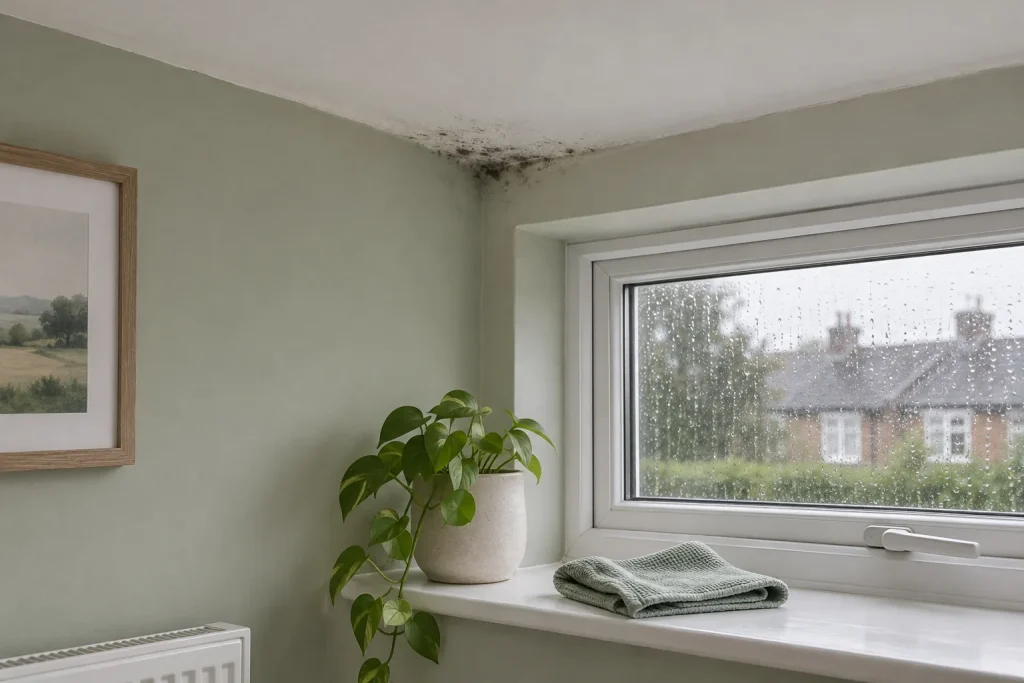
The frustrating part of recurring mould is that the first clean may appear successful. The marks disappear, the room looks better, then spots return in exactly the same place. Cleaning can remove visible growth, but it cannot stop water reaching a wall, window reveal or ceiling. A lasting response starts by finding why the material becomes damp, how often that happens and whether damage extends beyond what you can see.
A surface can dry and become wet again
Moisture does not have to be visible all day for mould to return. A cold wall may collect condensation overnight and dry later, leaving little evidence by the time someone visits. A small roof defect may wet a ceiling only during certain weather. A leaking pipe can create an intermittent mark when a particular fitting is used. Each pattern calls for a different investigation, even when the resulting growth looks similar.
Look back at the timing. Did the spots return during winter, after heavy rain, or following a plumbing repair? Has furniture been moved closer to an outside wall? Does the room now have a working extractor or is a vent blocked? The answers are clues rather than conclusions. They help avoid treating every recurring patch as a cleaning failure.
Why the same spot matters
A repeated location suggests that the conditions there remain favourable to growth. It may be a particularly cool part of the building, an area with limited air movement or a point where water enters. A wall can also contain more than one problem. Condensation could affect a cold surface while a rainwater defect wets the construction behind it. Government guidance recognises that sources of damp and mould can overlap and recommends identifying all sources of water damage and condensation.
Record the size and position before removing new growth. Take a wide photograph as well as a close view, with a date. Note whether the surface is wet, whether the patch follows a straight edge or appears behind an object, and whether nearby plaster or paint is damaged. If you rent, send the record to the person responsible for repairs and keep a copy of your correspondence. Avoid assuming that the colour of the growth reveals its species or cause.
Cleaning does not repair the building
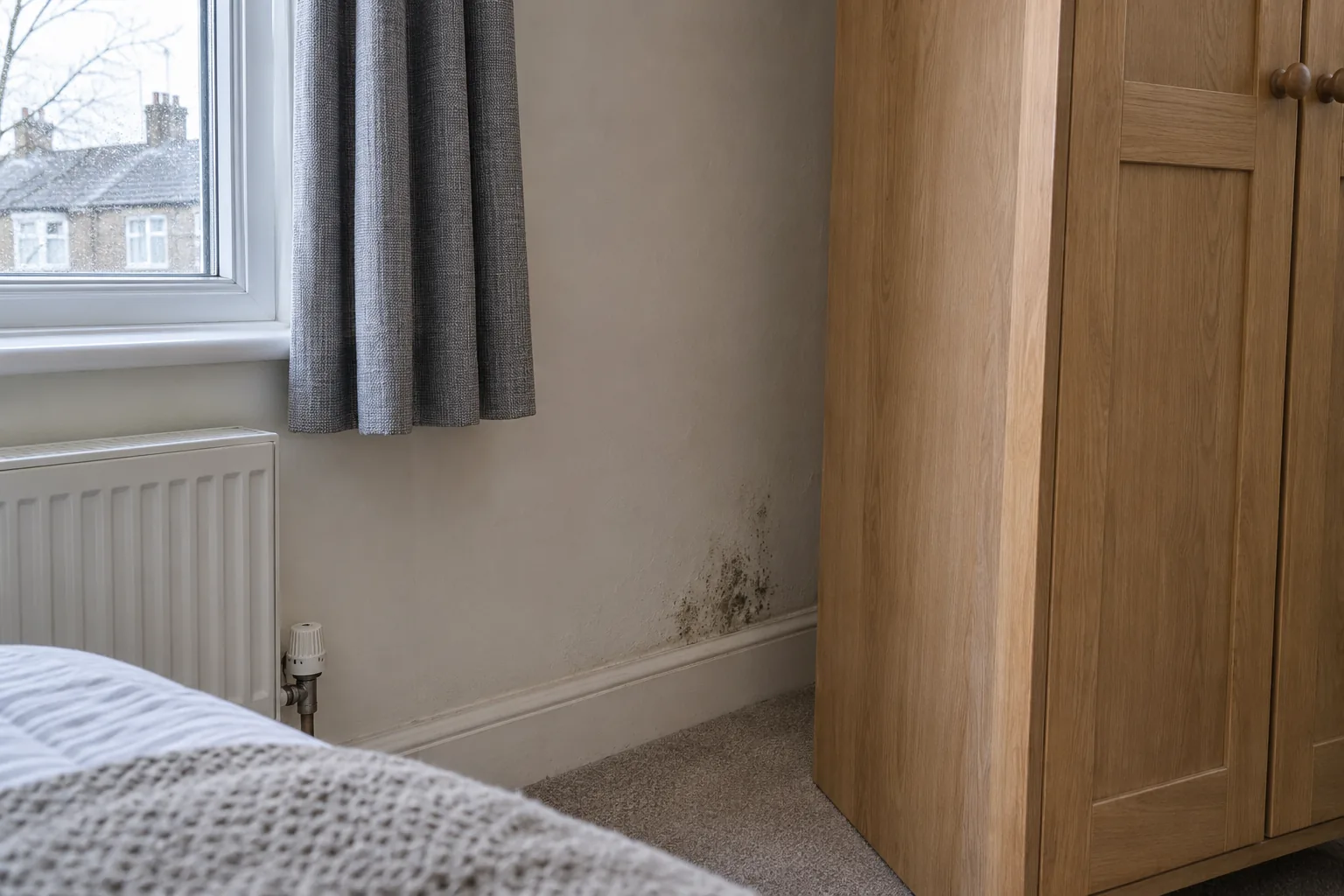
Where rainwater enters through a roof, wall, gutter or window detail, the entry point needs attention. Where a pipe leaks, the leak must be repaired and affected materials allowed to dry. Applying a stain blocker or anti-mould paint before this work may hide the symptom for a while, but it does not remove the incoming water. A damp inspection can help relate the internal mark to its history and to possible external or internal sources.
Pay attention to the material beneath the finish. Paint may peel or blister; plaster may soften; wallpaper may loosen. These signs do not automatically prove a particular type of damp, but they indicate that the issue may be deeper than a wipeable surface. A professional should explain which materials are affected and whether further investigation is needed before recommending treatment.
Condensation needs a wider look
If spots recur on cold corners, behind furniture or around window reveals, condensation is one possibility. Moisture generated by cooking, bathing and other ordinary activities can settle on cool surfaces. The answer may involve ventilation, heating, insulation or a combination. A failed extractor, poorly placed furniture or a cold bridge can change the local conditions. Harrow Council advises residents about ventilation and condensation, but the relevant response still depends on the property.
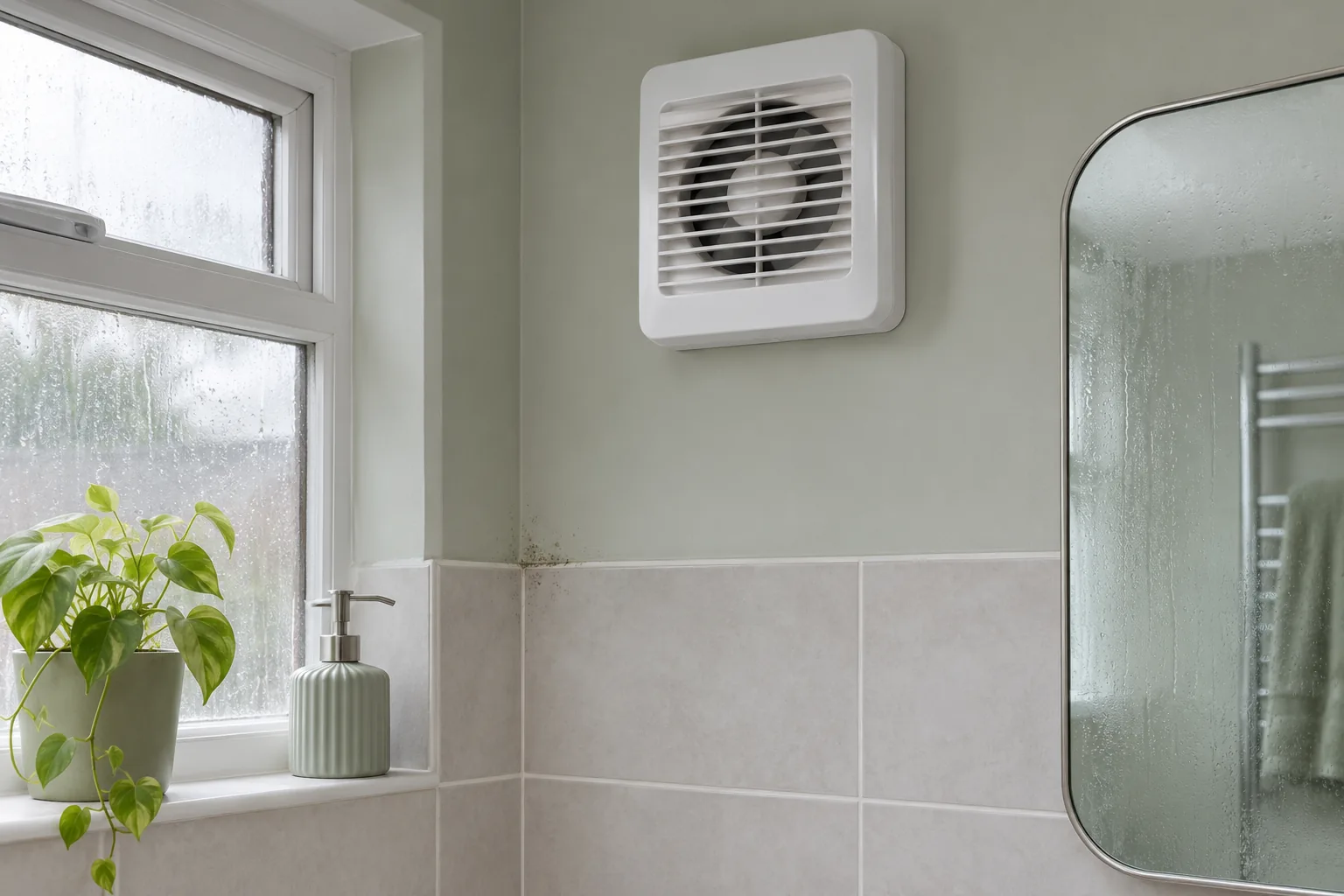
Check whether existing fans operate and vent as intended, and whether windows or vents provide the designed background airflow. Keep an eye on persistent droplets and water collecting on sills. These observations are useful, but they do not show whether a hidden leak is also present. If the pattern is unclear, a condensation investigation can consider the room conditions alongside the building fabric.
The return may reflect incomplete drying
After a water incident, surfaces can look dry before the material behind them has dried. A repaired pipe, cleared gutter or sealed opening removes the source, but absorbed moisture can remain. The time needed to dry depends on the material, extent and conditions. Repainting too soon may conceal continuing damage or trap attention on the finish rather than the underlying state. Ask how drying was assessed and what evidence shows that the source was resolved.
It is also possible for an old stain to reappear through decoration without new moisture. That is one reason to distinguish staining from fresh growth and to compare photographs over time. A localised patch that expands, feels damp or changes after rain deserves a closer look. Repeatedly buying stronger cleaning products is unlikely to answer that question.
A practical sequence for recurrence
First, document the location and timing. Second, note obvious moisture routes without disturbing finishes: windows, room ventilation, plumbing nearby and external rainwater details. Third, decide which clues need a professional check. Fourth, agree a scope that covers both safe removal of growth and the moisture source. Finally, monitor the area after work, using photographs taken from the same position. This sequence avoids declaring success simply because a wall looks clean on the day of treatment.
Keep the monitoring simple enough to maintain. A dated note about the weather, window moisture and any change in the patch can be more revealing than a complicated spreadsheet that nobody updates. If a repair has been made, ask what would count as evidence that it worked. The absence of new spotting over a short dry spell may be reassuring, but it cannot test a rainwater repair until comparable rain has occurred. Likewise, a condensation problem may need to be observed through colder conditions. Agree when to review the area rather than treating a single clean photograph as the end of the matter.
Different occupants may notice different signs, so compare their observations without assigning blame prematurely.
Ask a contractor to explain what they observed, what remains uncertain and which work addresses each cause. If external water might be involved, an inspection of gutters and outside water routes may be relevant. If pipework or another concealed source is suspected, hidden leak detection is a different line of enquiry. Neither should be ordered merely because mould has returned; choose the investigation that fits the evidence.
When to seek help
Do not wait for a large area to develop if the same patch keeps returning, materials are damaged, the cause is uncertain or someone in the home has health concerns. Damp and mould can affect health, and a prompt assessment is sensible. Describe the history accurately, including any cleaning, repairs and changes in room use. A useful next step is an explanation of the moisture mechanism and a plan to address it, followed by appropriate treatment of the affected material. That gives the clean surface a better chance of staying clean.